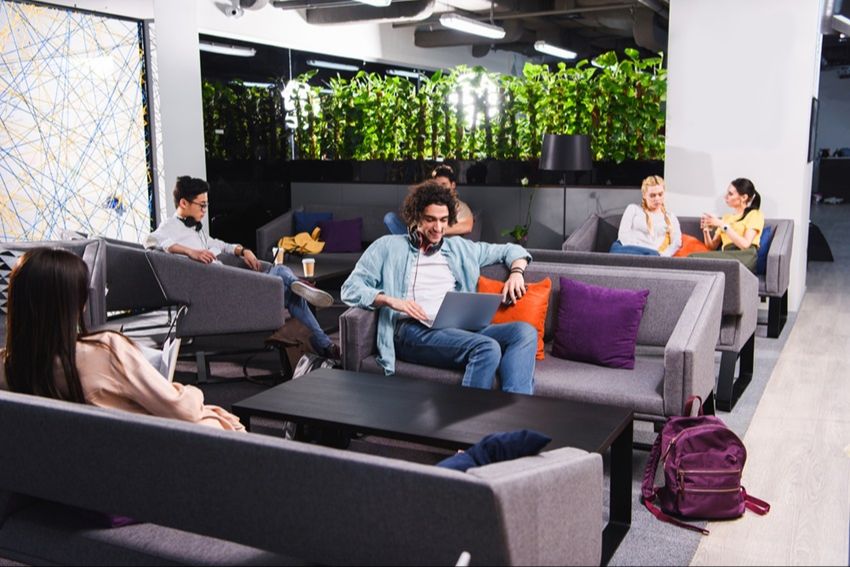
A new profession: "developer of third places".
Third-Party Centers are being developed to build the future, develop territories and create social links. New professionals are emerging to run them, bring them to life and make them profitable.
Publish at July 24 2007 Updated April 26 2023


Distance learning is most often accompanied by the implementation of tutoring in order to ensure a certain social integration of students or at least to prevent the latter's feeling of abandonment and loneliness in the face of their course.
Student-to-student tutoring allows for pedagogical, but above all, relational support and at lower costs, considering the limited resources of most distance learning institutions.
The research report Inter-Student Tutoring presents the context for implementing such a device and, through extended activity theory, analyzes its contributions and limitations.
According to feedback from experiences, student tutoring seems to be an effective means of generating a social bond.
In addition, this type of tutoring brings a complementary dimension to the teacher-student relationship, a dimension that makes up for the relational shortcomings often observed in distance education and even includes a formative value for student tutors.
Download the research report: Interprofessional student tutoring: for a creation of the social link in learning by Aude Bertschy and Denis Gaste, .pdf format
You might also like:
A new profession: "developer of third places".
Third-Party Centers are being developed to build the future, develop territories and create social links. New professionals are emerging to run them, bring them to life and make them profitable.
Putting screens back into learning for a while
Screens are a part of everyday life for students and teachers alike. This has even increased since 2020. As a result, both groups can experience technology fatigue with negative effects on both sides. What if the school and the home sphere left some learning time without digital and screens?
Spaces for learning to learn together
Places, their colors, shapes, lights and roughness, grate on our bodies and senses and play a role in shaping us.
Residential tourism: when relocation becomes the trip of a lifetime
Residential tourism is redefining the boundaries of travel. Families and entrepreneurs no longer use tourism as a parenthesis, but as a tool for rebuilding their lives. Driven by the risk society, they are looking for mobility, fiscal agility and quality of life. Half-tourists, half-migrants, these lifestyle nomads don't flee: they choose.
The liberated / empowering company in a complex and uncertain world
The development of automation allows robots and A.I. to dedicate the market to execution tasks that do not require commitment and creativity. The competition with robots is tough and the only tasks left to humans are those that require adaptability and continuous professionalization and therefore commitment.