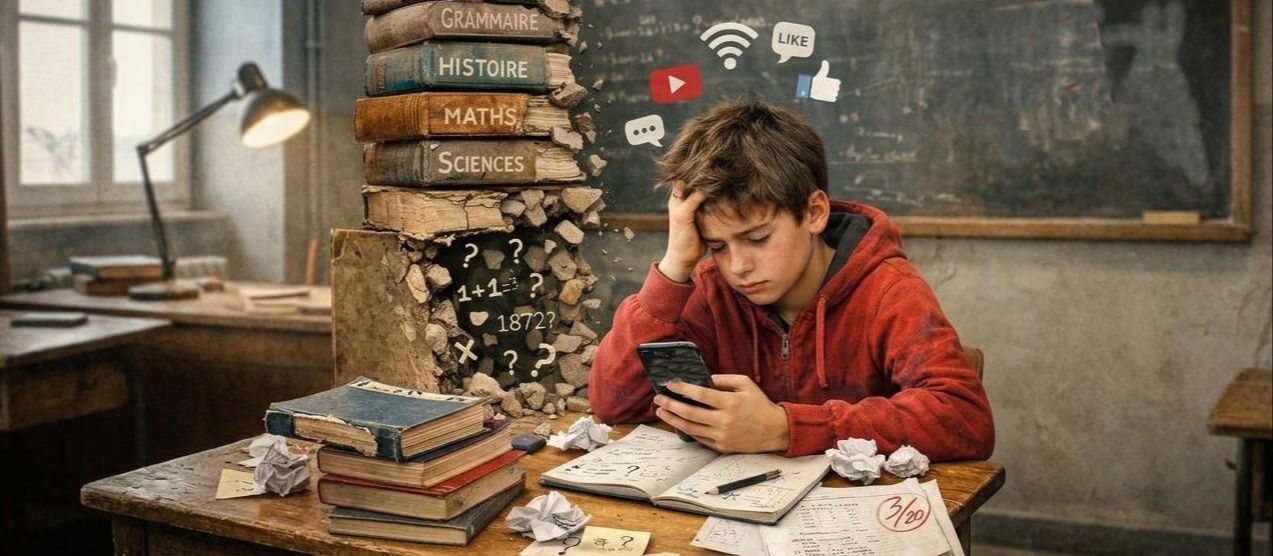
Writing among teenagers, put to the test by digital technology and AI
Digital writing offers a lot more freedom, but its users also run many risks.
Publish at April 10 2023 Updated April 10 2023


It's imperceptible, at least I hope so. But as you read this, your attention is bouncing around, looking for points of focus off your screen, lingering on the evocations of a word or phrase, going back to a window, a pet, or a loved one who crosses the field of vision. Are you still here? Then you have probably fought against yourself a little, you have refocused your attention. But already it's leaving again, inviting you to turn to other objects. The quiet position is not natural for her. Fortunately, because it's probably what saved the lives of some of our ancestors!
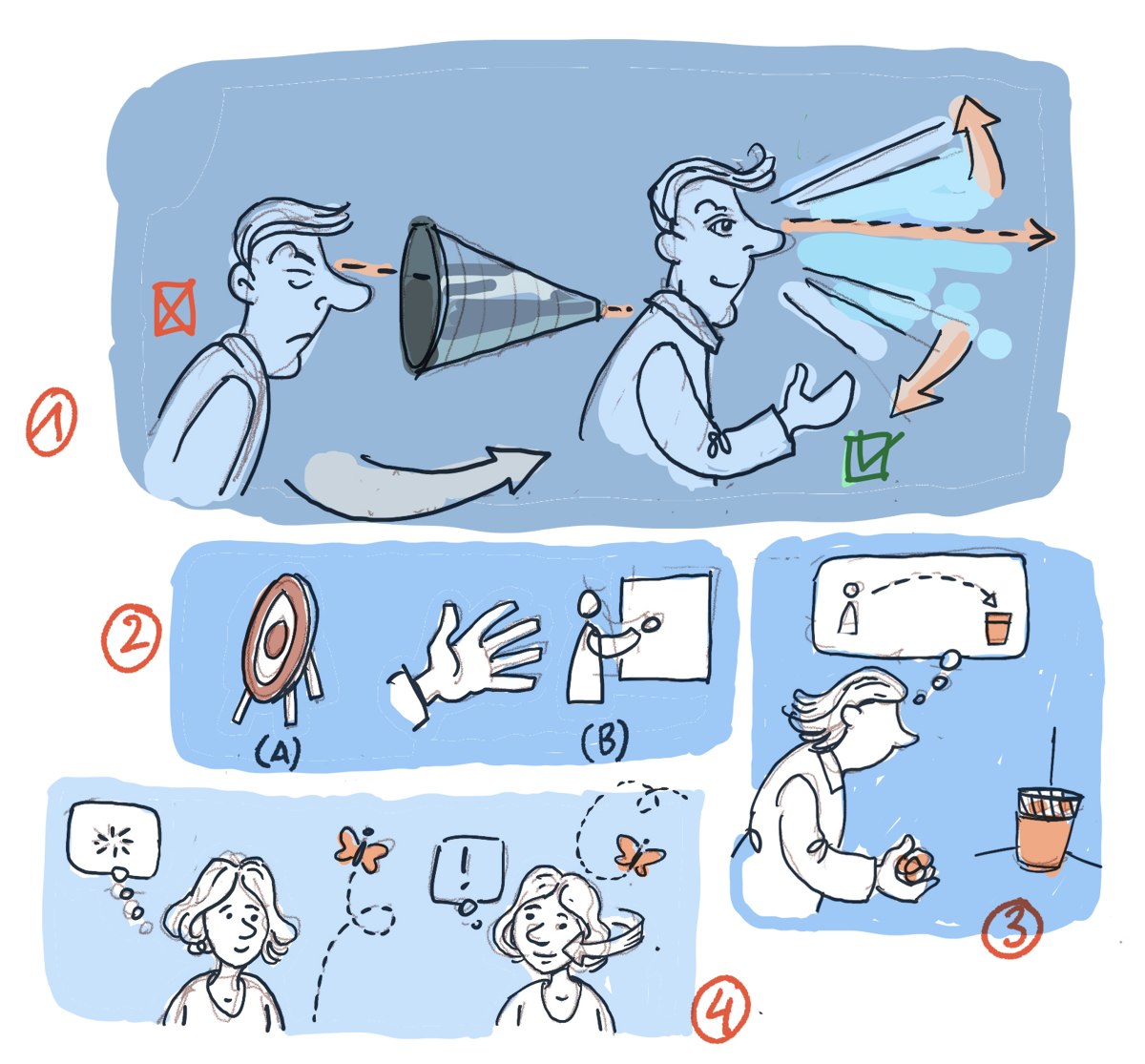
But our environment and our constraints have changed. In L'attention, ça s'apprend !, Jean Philippe Lachaux suggests that academic and professional success probably owes a lot to the fact of knowing what to focus one's attention on, and managing to maintain it on its object. "Pay attention!" or "You didn't pay attention!" are phrases we hear a lot in our learning. But pay attention to what? Taking the example of a novice driver, he shows us how gradually the learner motorist learns to stop looking at the gearshift, to detect the relevant signs in the rearview mirror and more globally to unconsciously identify on which point to fix his attention.
How to do this? We must consider that attention can be learned and practiced. Jean Philippe Lachaux has worked extensively with teachers, he has produced valuable training and popularization documents that link recent scientific knowledge with practical advice.
Jean-Philippe Lachaux meets a need for exercise and training. The work of conviction is no longer to be done. The books on the attention economy, thegoldfish civilization and the professionally produced materials have all convinced us.
But in practice?
Jean-Philippe Lachaux accompanies the commitment of thousands of teachers who help students on a daily basis to maintain their attention. His advice and exercises apply to everyone.
Drawn summaries, short chapters made up of well-identified headings, take us from an ordinary experience to take us from an ordinary experiment to the science of neurons and passing through exercises. We learn that without intention, attention span is reduced, and that a quarter of the and that a quarter of a second is enough to divert it towards another another object.
Neurons are specialized in maintaining our attention. To support their effectiveness, the author advocates clear intention, the anticipation of ways of acting and actions that we can perform with with this object with confidence and the conversion of the perception. What I see, I verbalize. What I hear, I imagine in a diagram or visual representation. Thus a pupil who aims at the with a pellet visualizes a bell curve while staring at his makeshift while staring at his makeshift basket.
The issue of attention is not limited to an efficiency of cognitive processes in the classroom or at work. Meditation also refers to this capacity. Fixing one's attention on one's perceptions, on what one sees, smells and feels or hears and even on one's stream of consciousness are at the heart of this practice. So meditation is not about going blank. Far from it.
Attention is also a struggle. Constantly jostled by numerous solicitations, bells, interruptions and alerts of all kinds, it is highly coveted. So much so that we speak of an attention economy to explain the success of GAFAM, whose billions in sales are linked to a skill: the ability to capture and hold our attention.
In his book Méditer jour après jour,Christophe André suggests some ways to prevent our attention from wandering. He points to two sources of suffering:
We also think of Cynthia Fleury's book, Ci-git l'amer, where the philosopher shows us how the person who feels resentment struggles to detach his or her attention from what makes him or her bitter.
Christophe André also offers us some exercises. The first concernsattentional openness. Our attention can be focused on an object, or open to other perceptions. He suggests that we gently detach ourselves from the object of our attention and gradually include other feelings. Sounds, tactile perceptions, emotions.
A second exercise concerns the quality of attention. According to this psychiatrist, it can be analytical, fixed on a task to be solved or immersed. Immersed attention is that of the experienced skier, who does not decorate every aspect of his or her trajectory or sensations, but who nevertheless remains very attentive.
Finally, he distinguishes between "reactionary" attention, which changes its object according to the stimuli, and attention decided and directed by the will.
Opening one's attention and guiding it rather than allowing it to freeze helps combat anxiety and depression. Mindfulness meditation can thus restore a quality of attention.
With sometimes different intentions and vocabulary, the two authors come together. Away from the debates and consensual condemnations of video games or phones, they focus on what it is possible to do, day by day, at home, in the classroom or why not in a more professional setting.
The ATOLE program that Jean-Philippe Lachaux deploys with teachers teaches students to pay attention to the most effective target and to shift their attention from one target to another, whether it is their internal states or external stimuli.
Illustrations: Frédéric Duriez
Resources:
For very clear exercises and explanations:
Natalia Morales, Mathieu Cebrai, association Raptor Neuropsy: Attentional abilities
https://www.raptorneuropsy.com/_files/ugd/ace62b_05ef1b1ea17a48618d92d98aa803f10d.pdf
You might also like:
Writing among teenagers, put to the test by digital technology and AI
Digital writing offers a lot more freedom, but its users also run many risks.
The library, our space for cultural transmission
The cultural transmission strategies of museums serve as an inspiration and many university and school libraries are taking the same path. They evolve into cultural spaces and assume in the best way the role of cultural transmission. An imposed culture wears like a scar, a favored culture shows itself as a pride.
The effects of bodily practices in the classroom on students' attention [Thesis].
Does body-based pedagogy enable students to invest more fully in their learning?
At the end of the nineteenth century, hundreds of painters attended prestigious and demanding workshops that provided academic knowledge. It was difficult to enter, they worked hard, and they left with an impressive knowledge. No mistake in drapery, anatomy, perspective, composition. Teachers go in search of 150 year old teaching methods.
What if goals are a disservice to performance and learning?
Excessive focus on results can paradoxically undermine performance by generating anxiety and paralyzing action. Examples from sport and companies show that there are effective management and pedagogical alternatives.