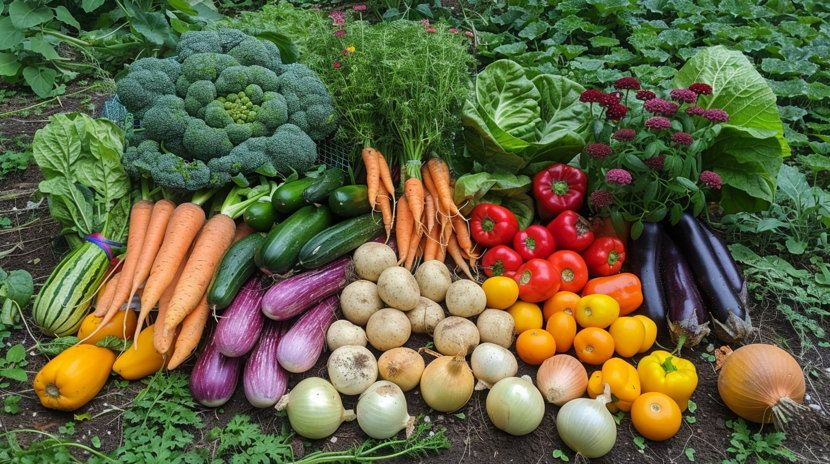
Does the quality of what we eat matter more than the attention we pay to it? The loss of nutritional value in food is a worrying phenomenon affecting our food.
In this article, we put a figure on the phenomenon and suggest ways of remedying it at our own level.
Food has lost its nutritional value
According to Nature magazine, loss is present in significant proportions in most food products:
Raw fruit and vegetables have seen a drop in their nutritional value, with decreases varying according to nutrient and product type. For example, protein content has fallen by 6%, while vitamin B2 has seen a more significant drop of 38%.
Nutrients affected include :
- Calcium, which fell particularly sharply in broccoli, kale and mustard greens.
- Iron, which declined significantly in chard, cucumber and turnip greens, as well as in certain vegetables grown in Australia between 1980 and 2010 (sweetcorn, red-skinned potatoes, cauliflower, green beans, peas and chickpeas), with decreases ranging from 30% to 50%.
- Vitamin C levels have fallen considerably in asparagus, cabbage, mustard greens and turnip greens.
Cereals are not to be outdone, with a study revealing that the protein content of wheat fell by 23% between 1955 and 2016. What's more, manganese, iron, zinc and magnesium levels have also fallen considerably in cereals.
These declines in nutritional value also impact meat consumers, as farm animals now feed on less nutritious grasses and grains, making meat and other animal products less nutritious than before.
Quantity at the expense of quality
The loss of nutritional value in fruit and vegetables is linked to modern farming practices and rising levels of carbon dioxide in the atmosphere.
Current agricultural practices aim to increase crop yields, by growing plants bigger and faster. Accelerated growth does not allow plants to absorb nutrients from the soil or synthesize them internally at a sufficient rate. What's more, higher yields dilute nutrients in a larger volume of crops, reducing their concentration in fruit and vegetables. As farmers are paid according to the weight of their crops, they are encouraged to adopt practices that damage nutrient content.
Intensive cultivation damages the soil, depleting its resources and compromising plants' ability to form partnerships with mycorrhizal fungi. These fungi act as root extensions for plants, improving their access to soil nutrients and water. Intensive farming thus reduces soil quality and fertility, affecting plants' ability to absorb necessary nutrients.
Rising levels of carbon dioxide in the atmosphere are another factor contributing to the decline in the nutritional value of food. When crops such as wheat, rice, barley and potatoes are exposed to higher levels of carbon dioxide, they generate more carbon-based compounds, resulting in a higher carbohydrate content. In addition, crops absorb less water when carbon dioxide concentrations are high, reducing their uptake of micronutrients from the soil. Experiments have confirmed that concentrations of protein, iron, zinc and several B vitamins decreased in different types of rice after exposure to higher levels of carbon dioxide.
How can I find quality food?
A good solution is to provide for your own needs by cultivating a vegetable garden using ancestral natural methods.
Cultivating a vegetable garden using natural ancestral methods, such as permaculture, composting and integrated pest management, allows you to create a balanced and productive ecosystem while respecting the environment. Here are a few steps and tips to get you started:
- Plan and observe your space: before you start planting, observe your space and think about its organization. Identify sunny and shady areas, prevailing winds and water sources. Permaculture encourages working with nature rather than against it.
- Create plant guilds: in a plant guild, different plant species are associated in such a way as to create beneficial interactions between them.
For example, some plants attract pollinating insects, others repel pests or improve soil quality.
- Use compost: Compost is a natural fertilizer obtained from the decomposition of organic waste (fruit and vegetable peelings, dead leaves, grass clippings, etc.). It enriches the soil with nutrients and improves its structure. You can create a compost heap in a corner of your garden or use a composter.
- Mulch the soil: mulching consists in covering the soil with a layer of organic material (straw, dead leaves, bark, etc.) to protect it from erosion, limit water evaporation and reduce weed growth. What's more, as it decomposes, mulch enriches the soil with nutrients.
- Practice crop rotation: to avoid soil exhaustion and disease proliferation, it's important not to grow the same plants in the same place every year. Plan a rotation over several years, alternating vegetable families.
- Give preference to old and local varieties: old and local varieties are generally more resistant to disease and better adapted to the climate than modern hybrid varieties. They help preserve biodiversity.
- Adopt integrated pest management (IPM): IPM consists of managing pests and diseases by encouraging natural regulatory mechanisms (predators, parasites, etc.) rather than resorting to chemical products. For example, install bird nesting boxes or insect hotels to encourage the presence of beneficial insects in your garden.
- Save water: permaculture encourages the use of efficient, water-saving irrigation systems, such as rainwater harvesting, drip irrigation or the creation of ponds and basins.
- Encourage biodiversity: a vegetable garden rich in biodiversity is more resilient and productive.
To achieve this, plant a wide variety of plants, create habitats for wildlife and favor native species.
By following these permaculture principles (source: https: //www.horticulteur.net/permaculture/) and carefully observing your vegetable garden, you'll create a harmonious and productive ecosystem, while respecting the environment.
If you can't grow your own, opt for organic and local produce. Organic and locally-produced foods tend to be richer in nutrients than those from conventional agriculture.
The educational value of vegetable gardening
If you have children, managing a vegetable garden is also a source of learning and reconnection with nature.
Vegetable gardening has many educational benefits for children and adults alike. Not only does this activity enable the acquisition of knowledge and practical skills, it also develops sensitivity to the environment and promotes personal well-being. Here are just a few of the didactic benefits of gardening:
- Discovering the life cycle of plants.
By cultivating a vegetable garden, we learn about the different stages in the plant life cycle, from germination to harvest.
This hands-on experience provides a better understanding of the biological and ecological processes that govern plant growth.
- Learning gardening techniques.
Vegetable gardening involves mastering various gardening techniques, such as sowing, transplanting, pruning, watering, mulching and crop rotation. These practical skills are useful for maintaining a garden and can be passed on to your children.
- Raising awareness of the environment and biodiversity.
The vegetable garden is a miniature ecosystem, home to numerous plant and animal species. By observing the interactions between the different elements of this ecosystem, we become aware of the importance of preserving biodiversity and respecting the natural balance.
- Develop patience and perseverance.
Gardening is an activity that takes time and patience.
Results are not immediate, and you may have to wait several weeks or months before reaping the rewards of your work. This experience helps develop perseverance.
How can we make up for the depletion of our food?
The depletion of nutrients in our food can be partially compensated for by the use of medicinal plants and food supplements. Here are some tips on how to do just that:
Medicinal plants
Many plants are rich in nutrients and can help to make up for deficiencies. Some of them can be taken as infusions, decoctions, mother tinctures or in capsule form.
Among the most interesting plants are nettle (rich in iron, calcium and vitamins), spirulina (an algae rich in protein, iron and vitamins) and ginseng (an adaptogenic tonic).
Food supplements
Food supplements can provide the specific nutrients your body needs. They come in a variety of forms (capsules, tablets, ampoules, powders, etc.) and with different ingredients (vitamins, minerals, amino acids, plant extracts, etc.). It's important to choose quality supplements adapted to your needs, and to respect the recommended doses. Ideally, you should seek professional advice.
How can I improve food quality?
From a global point of view, to improve the quality of your food, it's important to focus on soil health, as this has a direct effect on the nutrient content of crops. Here are a few strategies to adopt:
Regenerative agriculture: This method aims to restore soil fertility using sustainable practices. It improves the organic matter present in the soil, its general state of health, and increases the levels of certain vitamins, minerals and compounds in crops.
Avoid ploughing: Intensive ploughing can lead to the depletion of minerals in the soil. It is therefore preferable to limit this practice to preserve soil quality.
Plant cover crops: Cover crops such as clover, ryegrass or vetch can protect the soil from erosion and inhibit weed growth.
Crop rotation: Regularly changing the type of crop in each field can help improve the nutrient content of subsequent crops.
Eat a variety of foods: For the consumer, it's important to eat a variety of fruits, vegetables and whole grains of different colors. This helps to compensate for certain nutrient losses and satisfy nutritional needs.
Improving food quality requires sustainable farming practices and a varied diet.
Relearning how to farm and eat
Faced with the depletion of nutrients in our food, we need to adopt strategies to improve the quality of our food and preserve our health. Cultivating a vegetable garden using age-old natural methods, such as permaculture, composting and integrated pest management, is an effective solution for creating a balanced, productive ecosystem that respects the environment.
Favoring nutrient-rich organic and local foods contributes to a healthier, more sustainable diet. The use of medicinal plants and food supplements can help fill nutrient gaps.
Let's rethink the way we produce and consume to guarantee quality food and preserve our health and our planet.
See more articles by this author