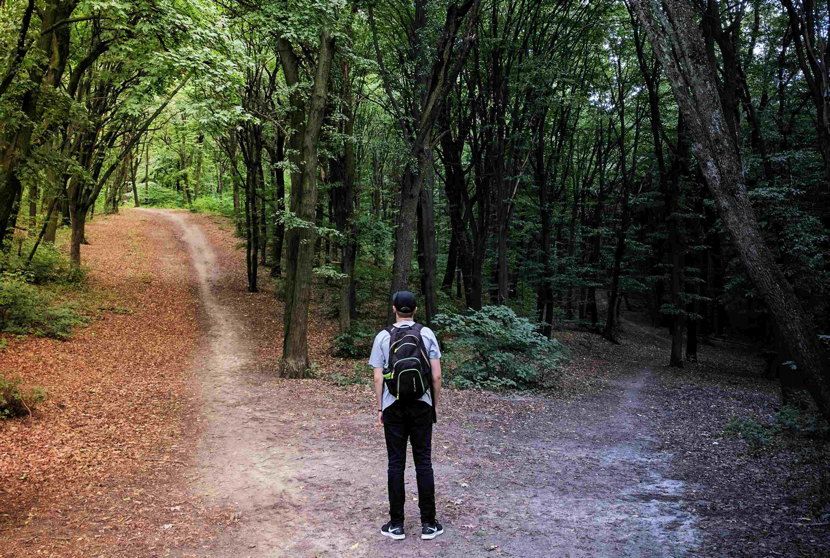
We make decisions every time we interact with the outside world: at work, on the move, before going out, before eating or with our phone, which we consult dozens or hundreds of times a day. Decisions, decisions... How do we do it?
We've developed a number of techniques to respond appropriately to different situations. It doesn't take much thought to decide what to have for breakfast: the default option is what we most often choose. Habit, imitation, conformity and laissez-faire relieve us of a good number of decisions. Training and repetition lead us to automate many elaborate chains of decisions, usually geared towards optimal satisfaction and efficiency. Rare or important decisions require more thought.
Channeling, UX or space design techniques are another way of limiting options and orienting decisions. A fence or frame radically limits paths, gifts give weight to an option, and real or fake deadlines or competition stimulate us to speed up our decisions. The playfulness of activities plays with this decision-making mechanism.
A large part of pedagogy is based on the postulate that an ignorant person can hardly decide anything in areas of which he is ignorant. Intuitively, students understand that they need to learn a great deal before they can assume responsibility for a decision. As a result, the educational system tends to make the student passive: "Do as you've learned" is the message that follows, framing the power of decision - a power that he will have to assume one day!
This is why more advanced pedagogies are structured in such a way as to gradually lead students to make increasingly complex decisions. These pedagogies don't so much punish error as ignorance, and recognize that, at this level, the student is a critical judge of his or her activity, so there's no need to insist; we're there to help them move forward.
Happy reading!
Denys Lamontagne - [email protected]
Illustration: Aberrant Realities on Pixabay